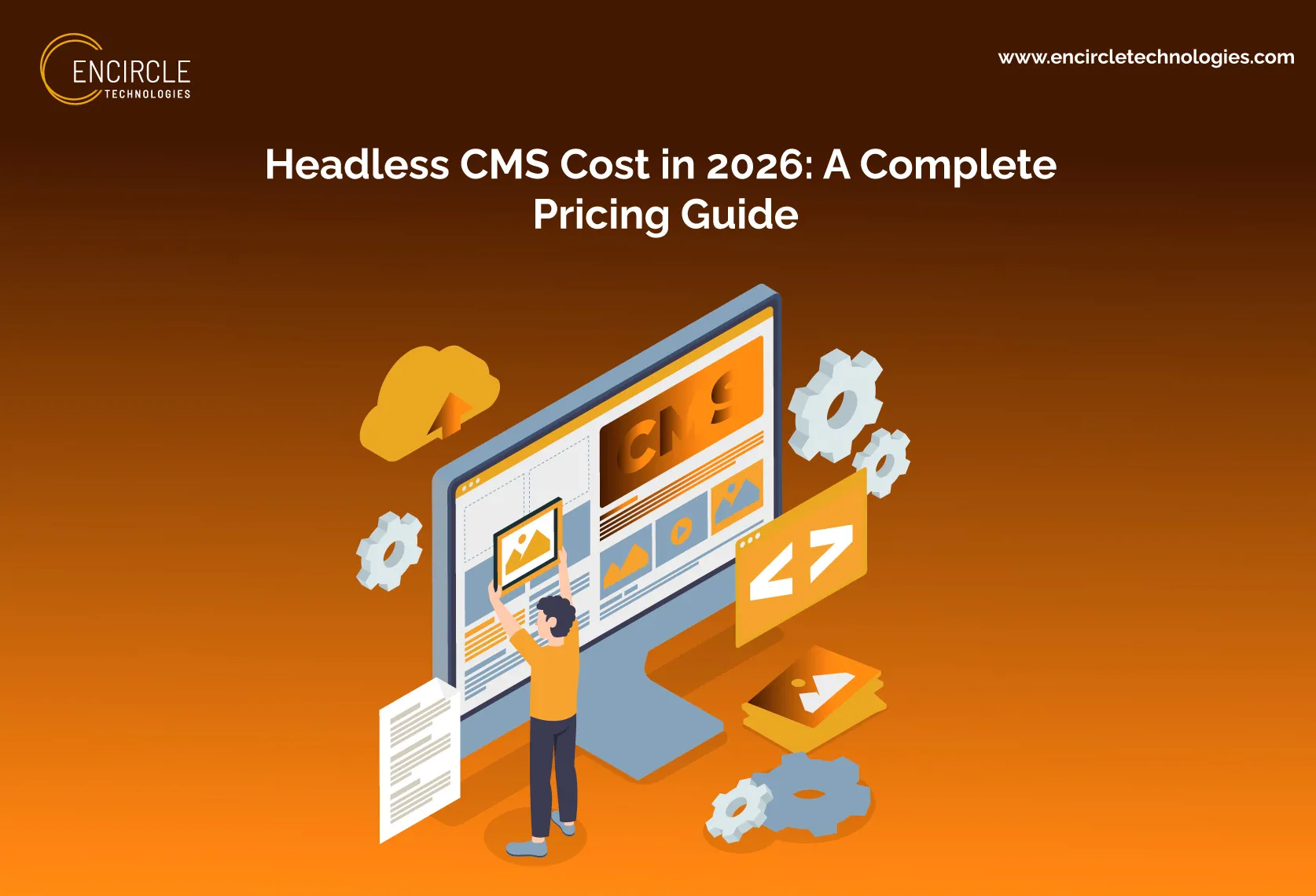
For any organization, choosing the right CMS is a crucial decision. Headless CMS development services enable businesses to create quicker websites, enhance user experience, and distribute content throughout various platforms. When beginning, many businesses ask: What does headless CMS cost? and how much does a headless CMS cost?
The overall headless CMS expenses rely on factors such as licensing, hosting, development, integrations, and ongoing maintenance. Headless CMS pricing is a key consideration for businesses planning their digital transformation, helping them avoid unexpected costs and evaluate long-term ROI. According to industry research, over 70% of enterprises have adopted or are planning to adopt a headless architecture to deliver faster, omnichannel digital experiences.
What is a Headless CMS?
A headless CMS is a solution that decouples content management from the frontend and enables content to be pushed out to a website, mobile app, or other digital platform via API. Headless CMS development services offer enhanced flexibility, faster speed, and scalability.
Businesses are moving toward headless CMS platforms in 2026 to ensure best-in-class customer experiences, optimize for omnichannel publishing, and connect with the latest technologies. One more advantage of having a trusted headless CMS implementation partner would be a smooth deployment.
Knowing the overall cost of a headless CMS is essential because it includes the cost to license, develop, host, integrate, maintain, and support. This guide will discuss the necessary price considerations, headless CMS price, what does headless CMS cost, how much does a headless CMS cost, and how to choose the right headless CMS development company to make the CMS more cost-effective.
What Determines the Cost of a Headless CMS?
The overall headless CMS expense relies on a number of factors such as licensing, hosting, development, and content needs. Costs are variable, and available options for headless CMS systems can vary from a few thousand dollars for smaller businesses to significantly higher amounts for enterprise-level businesses.
✤ Licensing Model
One of the initial considerations that impacts the headless CMS cost is the licensing structure. There are commercial and open source solutions offered for businesses to choose from. Open source CMS alternatives do not require any licensing fees, but there will be development, hosting, security, maintenance, and technical support costs too.
Commercial platforms offer managed infrastructure, regular updates, enterprise support and enhanced features for a monthly or annual subscription fee.
The subscription fee is generally determined by the number of users, API calls, storage, content entries and environments. In addition to this, enterprise licensing might be required for larger organizations, requiring dedicated infrastructure, compliance assistance, advanced security, service-level agreements (SLAs) and custom integrations. Enterprise editions will provide greater reliability and long-term stability at a greater cost than headless CMS.
✤ Hosting Infrastructure
Another significant aspect of headless CMS expenses is hosting. Automatic scaling, high uptime, global availability, better security, and disaster recovery are some of the reasons cloud hosting is a popular choice. The price of cloud hosting varies from $100 to $3,000 per month, depending on the volume of traffic, storage, CDN, and computing resources that most businesses use.
Because they want more control over their infrastructure, some businesses would rather have their own hosting. This option does, however, involve using dedicated servers, system administration, security monitoring, backups, software updates, and continuous maintenance. Businesses can help choose the cost-effective hosting model by selecting an implementation partner for the headless CMS that can be trusted. As sites grow, so do the cost of CDN services and image, video, and document storage. These expenses can be monitored using the headless CMS cost-effectiveness metrics and can be managed over the long term.
✤ Development Complexity
The headless CMS cost is greatly influenced by the development requirements. A small business website is likely to be cheaper compared to a large e-commerce site or a website for an enterprise or a multi-brand site, as bigger projects need more planning, development, testing, and deployment.
In addition, there are custom integrations with CRM, ERP, payment gateways, marketing tools, analytics tools, and customer support tools, which also contribute to the development costs. Depending on the intricacy of the integration, each one costs between $1,000 and $10,000. A lot of businesses partner with a dependable headless CMS agency to construct secure and scalable integrations effectively.
API development is also a major expense, as it is needed to integrate the CMS into websites, mobile apps, ecommerce solutions, search technology, authentication solutions, inventory management, and customer records. The front-end framework (such as React, Next.js, Vue, Angular, or Svelte) can also affect the development time and maintenance cost. To create modern applications for the frontend without compromising on development costs, many businesses are opting to work with a headless ecommerce development company in India.
✤ Content Requirements
Content needs also have an impact on the overall headless CMS expense. Websites that contain more than one type of content, such as blogs, products, services, events, FAQs, landing pages, testimonials, and case studies, need to be more carefully planned and have a more complex content model than smaller websites.
Multilingual content is usually required by businesses that cater to a worldwide audience, which not only adds to translation workflows, QA, editorial management, and storage costs, but also results in a more complex process.
There is also user management that is important, as each organization will have different access levels for the content editors, content developers, marketing team, publishers, administrators, and the legal team.
A seasoned headless CMS development company can help craft the proper content structure, set up user roles appropriately, and optimize future headless CMS cost-effectiveness measurements while minimizing future maintenance costs.
A Detailed Look at Headless CMS Pricing Components
By grasping the various parts of the pricing, businesses can make more accurate estimates of the overall cost of headless CMS. Each aspect of setup and maintenance is a contribution to the overall investment.
✦ Initial Setup Costs
The first phase of implementation involves configuring the development, staging, and production environments, creating content models, and setting up the CMS. Having an experienced headless CMS implementation partner makes it less likely that the platform will be misconfigured from the beginning, minimizing potential development problems and expenses. These are one-time costs, but they are a large component of the initial headless CMS cost.
✦ Development Costs
The complexity of the project determines how much money is spent on its development. Skilled developers and careful planning are needed for the frontend development, backend integrations, API implementation, and authentication setup. There are also some custom features or third-party integrations that can add to the cost of headless CMS. For this reason, many businesses opt to use a trusted headless CMS development company or a headless ecommerce development company in India to ensure that their websites are scalable and affordable.
✦ Ongoing Operational Costs
Once a business is deployed, there will be continued operating costs to consider. These features encompass cloud hosting, frequent maintenance, security enhancements, bug fixes, monitoring, safeguarding backups, and technical support. Failure to account for these recurring expenses can result in the overall headless CMS cost rising over time. Regular maintenance contributes to enhanced website performance and security, as well as prolonging website lifespan.
✦ Scaling Costs
The CMS needs to evolve and accommodate more users, API requests, traffic, and storage as the business expands. Expanding infrastructure and increasing resource usage naturally increase headless CMS prices. As they scale up, many organizations incur an additional $200-$2000 in monthly costs. Businesses can scale efficiently without overspending by tracking growth with streamlined cost-effectiveness metrics in headless CMS.
Headless CMS Cost by Business Size
The cost of a headless CMS can vary significantly based on the scale of the business, its digital objectives, and the nature of its content management needs.
➤ Startups
Startups typically emphasize low-cost deployments with minimum features. They typically provide basic implementation of CMS, a responsive front-end, API integration, cloud hosting, and typical security features. Opting for flexible headless CMS development services enables startups to get to market faster without incurring too high a headless CMS development cost.
➤ Small & Medium Businesses
More sophisticated features are typically needed by small and medium-sized enterprises in order to foster growth. Oftentimes, this investment involves CRM integrations, marketing tools, multilingual content, user management, analytics, and improved scalability. This means most SMB projects will cost between $20,000 and $80,000, depending on how customized and integrated the project requires to be.
➤ Large Enterprises
For enterprise needs, advanced security, governance, compliance, and multi-region deployment are required for the large enterprise or enterprise-grade architecture. These projects may encompass several websites, applications, business systems, and global content operations. Enterprise solutions come with a higher price tag for headless CMS, but they offer more scalability, reliability, and return on investment. The company providing headless CMS development services can build enterprise solutions to fulfill complicated business needs and enhance operational efficiency.
Hidden Costs Businesses Often Overlook
Many businesses have a headless CMS agency estimation based on licensing and development costs, but they overlook some hidden costs that can impact the total cost of the headless CMS. You can help avoid financial surprises and budget overruns by planning these expenses.
➥ API Consumption Charges
The majority of the current CMS solutions bill for API usage. API consumption costs can also go up as the amount of traffic to the website grows, or as the number of mobile app uses and/or content requests increases. A professional headless CMS company can fine-tune API calls and caching methods to minimize extra costs.
➥ Third-Party Integrations
Integrating the CMS into other systems, such as CRM, ecommerce, payment gateways, marketing automation, analytics, search and customer support platforms, can involve extra creation, licensing expenses, and maintenance. These integration costs should always be taken into account when calculating the price of headless CMS.
➥ Migration Costs
The content migration, URL mapping, preserving SEO, data validation, testing, and quality assurance are key aspects of migrating from a traditional CMS. Migration costs and project time are directly related to the complexity of the existing site.
➥ Staff Training
Content editors, developers, administrators, and marketing teams need to be trained in a new CMS. Training investments have a beneficial impact on productivity, the number of operational errors, and how efficiently teams use the platform.
➥ Performance Optimization
APIs, images, front-end coding, caching, and CDN settings should be continually optimized to maintain fast website performance. Performance updates bring constant improvements to the UX and SEO and contribute to better metrics related to the cost-effectiveness of the headless CMS.
➥ Security & Compliance
Never neglect security. Security monitoring, vulnerability testing, penetration testing, access control, compliance, and data protection are other areas where businesses might need investments to protect. While these services add to the overall headless CMS cost, they can help mitigate security risks and safeguard valuable business data.
Cost Comparison: Traditional CMS vs Headless CMS
The decision between the two types of CMS, traditional and headless, hinges on your business objectives, budget, and growth plans. A traditional CMS might be more cost-effective in the initial setup, but a headless CMS can offer long-term benefits and scalability, as well as greater flexibility.
✦ Initial Investment
A traditional CMS tends to be less expensive, due to it having both the front and back ends constructed. A headless CMS typically costs more, however, since there needs to be API development, frontend development, integrations, and architecture planning. But this investment forms a more flexible and future-proof platform.
✦ Long-Term Maintenance
Using traditional CMS platforms means constant maintenance of plugins, themes, and even compatibility issues. The front and back ends of a headless CMS are separated, making updates simpler and maintenance less difficult. As time goes on, businesses can reduce maintenance and enhance overall efficiency.
✦ Scalability Costs
When businesses expand, legacy CMS systems might need significant changes or upgrades. A headless CMS is optimized to scale outwards, as it allows for more websites, applications, and digital channels to be added to the system using APIs. While headless CMS pricing may go up depending on traffic and storage requirements, scaling is easier and cheaper overall.
✦ Development Flexibility
Conventional CMS platforms offer fewer resources for customization as the developers are restricted to themes and templates available in the platform. With a headless CMS, developers enjoy the flexibility to create digital experiences using the latest frameworks, such as React, Next.js, and Vue. In India, many businesses collaborate with a headless ecommerce development company to build high-performance websites that suit their business needs.
✦ Total Cost of Ownership (TCO)
Businesses need to factor in licensing, hosting, maintenance, development, security, and future upgrades when weighing the TCO. The up-front cost of the headless CMS might be more expensive, but for expanding businesses that need flexibility and scalability, the long-term benefits can make up for that.
Open-Source vs Enterprise Headless CMS Pricing
Enterprises should also consider using an open-source or enterprise headless CMS. Both choices have various pricing plans and advantages for the long haul.
⮞ Open-Source Costs
Startups and smaller business enterprises are drawn to Open-source platforms due to their minimal or absent licensing costs. However, companies still need to make investments in technical assistance, development, hosting, security, maintenance, and upgrades. When calculating the total cost of the headless CMS, these expenses must be considered.
⮞ Enterprise Costs
The enterprise CMS platforms cover licensing costs as well as offer enhanced security, compliance options, managed hosting, dedicated infrastructure, service level agreements (SLAs), and premium support. Enterprise headless CMS solutions are more costly, but they minimize the risk of operations and enhance business continuity for large companies.
⮞ Which Offers Better Value?
The right one is dependent upon business objectives and resources. For businesses with well-established development teams and a smaller budget, open-source platforms suit them well. For organizations with sophisticated security and support requirements and those that need high availability, enterprise solutions are better. To determine the options and choose the most economical solution, businesses should talk with a reputable headless CMS development firm.
For many firms, the ROI is higher than the upfront cost of using a headless CMS.
✤ ROI Benefits
A headless CMS boosts your website performance, enables the delivery of content across all channels, and makes future growth much easier. How fast your website is plays a crucial role in the user experience, SEO ranking, and customer engagement. Scalability for businesses is also simplified; content management becomes centralized and more flexible for development. By quantifying these enhancements using headless CMS cost-effectiveness metrics, organizations can gain a better understanding of the return on investment (ROI) they are getting from their investment.
✤ When Headless CMS Makes Financial Sense
Headless CMS is a great option for companies with several sites, mobile apps, eCommerce stores, or digital platforms. It’s also great for businesses that are expanding quickly, going global, or offering customized client experiences.
✤ When a Traditional CMS May Be Enough
For small websites that have simple content management requirements and don’t require extensive customization, a traditional CMS might work just fine. For companies with more limited needs and budgets, the more sophisticated flexibility provided by a headless CMS might not be necessary. Comparing business objectives to existing objectives and future objectives will allow a business to determine which option is best.
Want Your Headless CMS Budget with Confidence
Carefully planned out headless CMS costs can prevent businesses from incurring unnecessary costs and ensure they invest wisely. The final budget will vary depending on costs like licensing, hosting, development, integrations, maintenance, and security. Headless CMS pricing and working with a reliable headless CMS development company can help you decide which to choose.
But don’t just think about the first headless CMS cost; look at the long-term advantages of this improved performance, easier scaling, and better CMS. By leveraging the correct strategy, companies can maximize ROI, improve the cost-performance metrics for the headless CMS, and create a future-proofing digital platform for growth and success.
Encircle Technologies is an IT company specialising in the Web and Mobile app development services for all types of businesses; small or large, for all business verticals, across the world. We’re proud to say that our team has worked with some truly incredible partners over a short period of time.
Build a Powerful Web Presence Platform That Drives Sales
Headless CMS migration includes moving a traditional CMS to a headless architecture that separates the content backend from the presentation layer. Most businesses are making this shift to improve flexibility, develop a better digital experience, and deliver content across various channels. With the best headless CMS development services, organizations can develop scalable sites, streamline content […]
Traditional CMS platforms are struggling to match modern digital demands. Organizations are moving beyond traditional CMS platforms to achieve better flexibility, faster digital delivery, and a consistent experience across sites, mobile apps, and other channels. A headless CMS migration system separates content management from presentation, allowing teams flexibility to develop quick and more customized digital […]
Multiple marketing agencies prefer White Label as the popular outsourcing form, since it helps them match their client demands. The upgrades in digital marketing have made white label development agencies popular. White label marketing is the ultimate way of assisting the best website development company in India to offer quality services to their clients. It […]








 Encircle Technologies